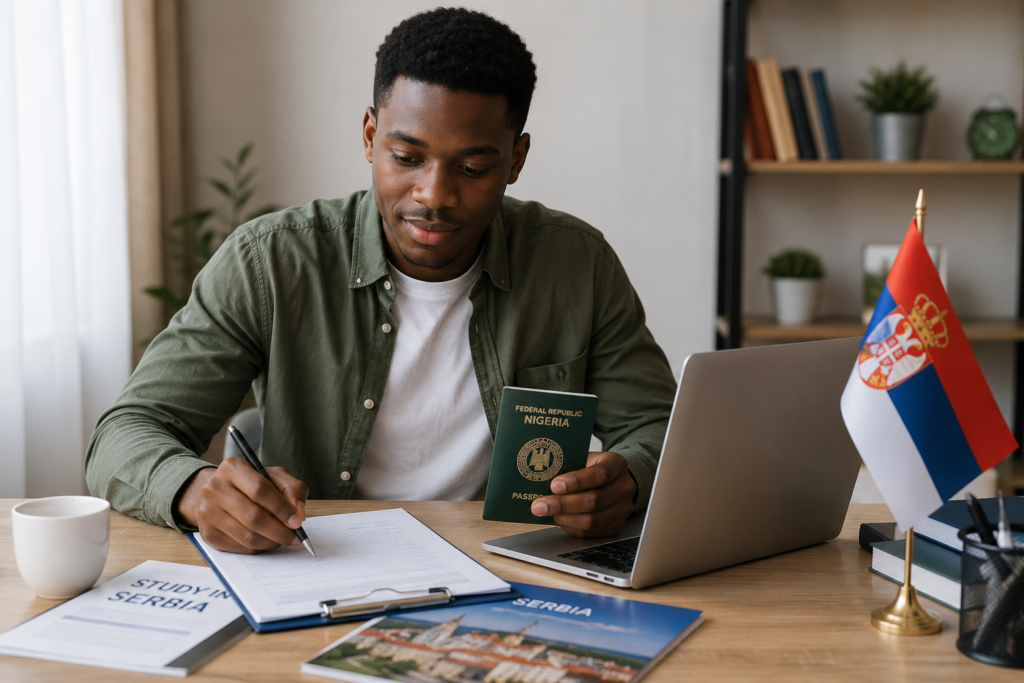
If you are looking to apply for student Visa as a Nigerian or you are citizen of another country looking to get a Serbian student Visa from Nigeria, this guide is for a it shows you how to go about everything from start to finish.
Serbia is not the first country that comes to mind when Nigerian students start planning to study abroad, but it has been growing steadily as an option, and for good reason. Tuition is a fraction of what you would pay in the UK or Canada.
Rent in cities like Novi Sad or Niš is genuinely affordable, and once you are in, the rest of Europe is basically next door. If you have an admission letter from a Serbian university sitting in your inbox right now, or you are still weighing whether to apply, here is exactly what the visa process looks like and how to get through it without the usual back-and-forth confusion.
What the Serbia Student Visa Actually Covers
Nigerians need a visa to enter Serbia, full stop. If your program runs longer than 90 days, which almost every degree program does, you will be applying for what Serbia calls a Type D visa, its long-stay category. This covers university students, language course participants, and anyone on a longer academic exchange at an accredited Serbian institution.
Here is the part people often miss: the visa itself only gets you into the country. It is not your ticket to stay for the whole degree. Once you land in Serbia, you still have to apply for a temporary residence permit based on education, and that is the document that actually keeps you legal for the length of your studies. Think of the visa as the key that opens the door, and the residence permit as what lets you keep living in the house.
One more thing worth knowing upfront: this visa does not come with a right to work. If you are counting on picking up a part-time job to help cover living costs, you will need separate authorization for that, and it is not something to assume will happen automatically.
SEE ALSO: How to Study in Serbia from Nigeria: A Complete Guide
Where to Apply From Nigeria
Serbia’s embassy in Abuja, at 11 Rio Negro Close, off Yedseram Street, Maitama, is where most Nigerian applicants will submit their documents. It actually covers a fairly wide territory too, handling applications from several other West African countries alongside Nigeria. There are honorary consulates in Lagos and Kano, but for anything visa-related, Abuja is where the real processing happens.
The embassy runs strictly by appointment, so do not plan on walking in with your folder of documents and hoping for the best. Email their consular section once your paperwork is ready and get a date booked. This alone can eat up a couple of weeks depending on how busy the embassy is, so factor it into your timeline early rather than treating it as an afterthought.
The Documents That Actually Matter
Everything starts with your admission letter. No embassy is going to look at a student visa application without official confirmation that a Serbian institution has accepted you, so this has to be sorted before anything else moves forward.
From there, your document folder should include a completed visa application form, your international passport, valid with at least 90 days left beyond your intended stay and issued within the last decade, plus a blank page for the visa sticker. Add passport photographs that meet the standard specifications, and you have the basics covered.
The money question is where a lot of applicants get nervous, and honestly, it deserves the attention. Serbian authorities want to see that you can support yourself at roughly 500 to 600 euros a month.
This does not have to come purely from your own savings account. A recent bank statement works, but so does a clearly worded scholarship letter, or a sponsorship letter from a parent stating they are funding your studies, as long as it is backed by evidence they can actually afford it.
Picture a student whose father runs a business in Lagos and is sponsoring the whole program. The embassy is not just going to take his word for it. They will want his bank statements or a letter from his accountant showing consistent income, alongside a written commitment to fund the studies. Skipping that extra layer is one of the more common reasons applications fail or delay.
You will also need proof of health insurance covering your full stay, some form of accommodation confirmation, whether that is a dorm letter from the university or a signed rental agreement, and a short note on your travel plans. If any of your documents were not originally issued in English, get them translated and notarized before your appointment, not after.
SEE ALSO: What Documents Do I Need to Study Abroad
How to Apply for Serbia Student Visa from Nigeria
Once your admission letter is in hand, the Visa application process looks something like this:
STEP 1: You fill out the application form, and this is worth doing carefully, because embassies do notice when a date on your bank statement does not line up with what is written on your form, or when your sponsor’s name is spelled differently across two documents. These small inconsistencies cause more delays than people expect.
STEP 2: Book your appointment with the Abuja embassy, since applications need to be submitted in person. On the day, hand over your full document set along with your passport, pay the visa fee, and hold onto your receipt.
Some applicants get called in for a short interview about their study plans or finances, though this is not automatic for everyone, so do not panic if it happens and do not assume something is wrong if it does not.
STEP 3: From there, processing generally takes 15 to 30 days. Consider a student who got their admission letter in June for a September intake. Applying in July, right after securing the letter, still left enough breathing room for a possible delay or a request for extra documents.
A student who waits until mid-August to even start gathering paperwork is cutting it dangerously close, especially once you factor in the appointment wait time on top of processing. Give yourself two to three months of lead time if you can.
STEP 4: Once you are approved and land in Serbia, the residence permit application is your next task, and it needs to be filed while your visa or initial stay is still valid, not after it lapses.
Cost of Serbian Student Visa
Budget for Serbian student Visa is somewhere between 60 and 100 euros for the visa fee itself, paid when you submit your application.
Once you are in Serbia and applying for your residence permit, expect another 100 to 150 euros on top of that.
Then there are the extras that catch people off guard, translation costs, notarization, and your health insurance policy, none of which are fixed and all of which depend on which providers you use. Fees do shift over time, so it is worth a quick email or call to the embassy to confirm current amounts before you submit anything.
SEE ALSO: Cost of Studying in Serbia vs Hungary for Nigerian Students
Settling In and Staying Compliant
Once you arrive, you are expected to register your address with local authorities, and this usually happens on its own if you are in a dormitory or officially registered accommodation. If you are renting privately, do not assume this is automatic. Confirm your landlord has actually registered you, because that responsibility can quietly fall through the cracks if nobody follows up on it.
Staying enrolled in the program you were approved for matters too. If you decide to switch universities or take a break from your studies, that needs to be reported, since it affects your legal status in the country.
And your health insurance and proof of funds are not just a one-time hurdle at the visa stage. Serbian authorities expect you to keep meeting those conditions for as long as you are living there as a student.
Final Thoughts
None of this is complicated once you see it laid out, but it does reward people who start early. The two things that trip up most Nigerian applicants are financial documentation that does not fully back up who is paying for the program, and simply starting the process too close to their resumption date.
Get your admission letter, build a financial case that actually holds up under scrutiny, and give the embassy enough time to do its job. If you already have your Serbian admission letter and want a second pair of eyes on your document set before your embassy appointment, SchoolViya can help you get it right the first time.